
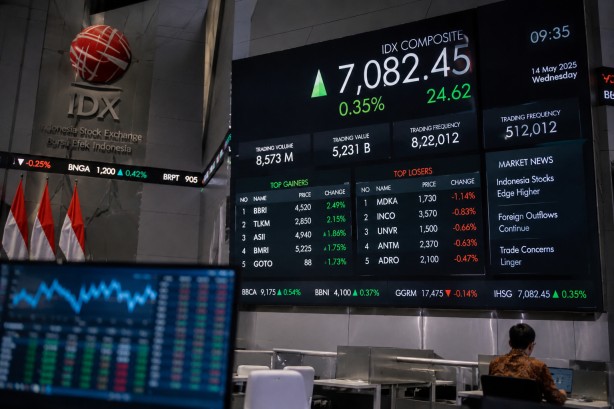
The Jakarta Composite Index (JCI), Indonesia’s primary stock market benchmark, experienced a modest increase of 0.34% over the week concluding on July 24, buoyed by robust trading activity. This rise occurred despite persistent outflows from foreign investors and escalating concerns about the global economic landscape. The market capitalization of the Indonesia Stock Exchange swelled to Rp 10,870 trillion, as the average daily trading turnover saw a significant 41% increase, reaching Rp 19.76 trillion.
Nevertheless, foreign investors continued to withdraw, maintaining their status as net sellers. Cumulative outflows have now reached Rp 79.09 trillion for the year, underscoring a cautious approach towards Indonesian assets. This cautious sentiment is further exacerbated by international factors, including the uptick in global oil prices and the introduction of new tariffs by the United States on imports from key trading partners. Notably, a 10% tariff has been imposed on certain goods from Indonesia.
The backdrop of rising global oil prices has been largely attributed to increased tensions in the Middle East, which have sparked concerns in financial markets worldwide. These tensions, coupled with the new U.S. trade restrictions, have contributed to a complex economic environment that investors are navigating with caution. The impact of these developments is not just limited to market dynamics but also extends to broader economic considerations.
Indonesia’s Finance Ministry has acknowledged the potential repercussions of higher oil prices, particularly regarding the pressure they could exert on the state budget for 2026. Despite these challenges, the ministry maintains that the country’s overall fiscal position remains robust and stable. This assurance is crucial as it signals the government’s commitment to maintaining fiscal discipline amid external economic pressures.