
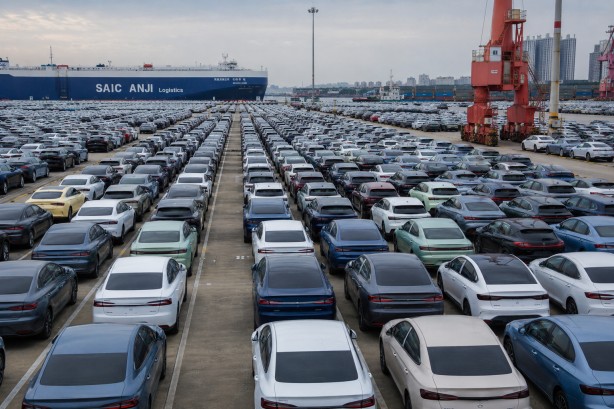
China has emerged as the world’s largest market for electric vehicles, igniting the growth of major automotive companies and revolutionizing the global car industry. This surge has been driven largely by government incentives, local investments, and robust consumer demand over the last ten years. As a result, hundreds of companies have ventured into the electric vehicle sector, leading to the rise of some of China’s most prominent automakers and fortifying its standing in battery technology and clean transportation.
However, the rapid expansion has brought about its own set of challenges, particularly concerning overproduction and the fierce competition that has ensued. Automakers have developed production facilities with the capacity to manufacture more vehicles than the current market requires. This imbalance has triggered price wars and financial strain throughout the industry, affecting both large and small players.
The heated competition has compelled manufacturers to reduce prices in an effort to attract more buyers and secure a larger market share. While larger corporations continue to pour resources into technological advancements, production capabilities, and international expansion, smaller companies are finding it difficult to maintain their footing in this highly competitive environment.
Concerns about overcapacity have also reached the ears of Chinese officials, who have expressed apprehension that unchecked growth in the sector could pose economic risks. Industry experts highlight that the challenge now lies in finding a balance between fostering innovation and maintaining healthy competition, all while ensuring sustainable long-term development.
Despite these issues, China remains at the forefront of the electric vehicle revolution. Its manufacturers are not only dominating the domestic market but are also expanding their reach into international arenas, playing a pivotal role in shaping the future of transportation worldwide.