
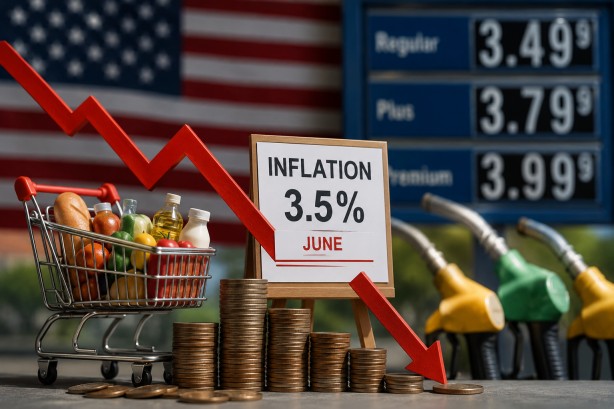
In June, inflation in the United States decelerated to an annual rate of 3.5%, driven by a temporary dip in energy prices that helped bring down overall consumer expenses. The latest Consumer Price Index (CPI) figures indicate a cooling in inflationary pressures after earlier peaks in the year, with prices experiencing a 0.8% drop compared to May. This decline was largely attributed to reductions in gasoline and fuel costs, which managed to counterbalance upticks in crucial areas such as food, housing, and utilities.
Core inflation, a measure that excludes the often-volatile food and energy sectors and is a key focus for the Federal Reserve, also saw a decline, standing at 2.6% year-over-year. Despite this easing, the respite might be fleeting, as geopolitical tensions in the Middle East have begun to drive global oil prices upwards once more. This resurgence in crude oil prices is already manifesting in higher fuel expenses for consumers and rising operational costs for sectors like aviation and transportation.
The Federal Reserve is anticipated to carefully evaluate the fresh inflation data alongside the state of the labor market at its forthcoming policy meeting scheduled for later in the month. Although the reduction in inflationary pressure is a positive development, it still exceeds the central bank’s long-term target of 2%. This situation creates ambiguity around when the Fed might consider adjusting interest rates in the future.
While the recent inflation figures provide some relief, the sustainability of this trend remains uncertain given the volatile nature of global energy markets. The interplay between easing inflation and rising oil prices highlights the ongoing challenges faced by policymakers as they strive to balance economic growth with price stability.