
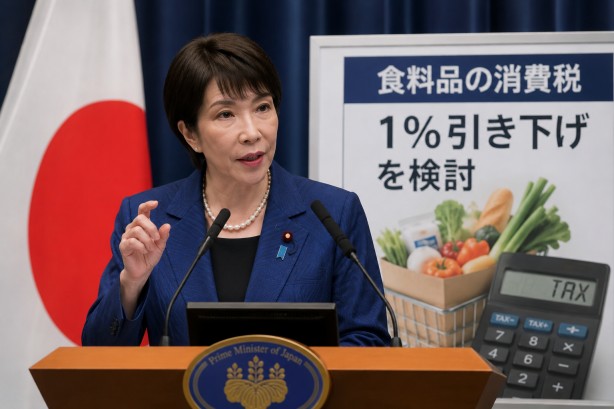
In a move aimed at alleviating the financial burden on households, Japanese Prime Minister Sanae Takaichi is poised to direct the Liberal Democratic Party to advance a proposal that would significantly slash the consumption tax on food items. This proposed reduction, from the current rate of 8% to a mere 1%, is planned to last for two years beginning in April 2027. The initiative comes in response to a stalemate in cross-party negotiations concerning tax reform.
The government’s strategy, supported by the ruling coalition, pairs the temporary tax cut with financial assistance specifically targeted at low- and middle-income households. The proposal outlines approximately ¥600 billion in financial support, which is designed to further mitigate the cost-of-living challenges faced by many families. This dual approach not only aims to bring immediate relief but also seeks to address the broader economic pressures affecting households across Japan.
In order to ensure the timely implementation of this plan, the government is working toward finalizing the policy by early August. Following this, the necessary legislation will be introduced during an extraordinary session of parliament later in the year. These legislative steps are crucial to meet the target date of next April for the tax cut’s commencement.
The proposed tax reduction reflects a broader governmental effort to stimulate economic activity and ease the financial strain on consumers. By lowering the cost of essential food items, the government hopes to enhance purchasing power and stimulate spending. This initiative is part of a larger economic strategy to foster resilience in the face of ongoing economic challenges.