
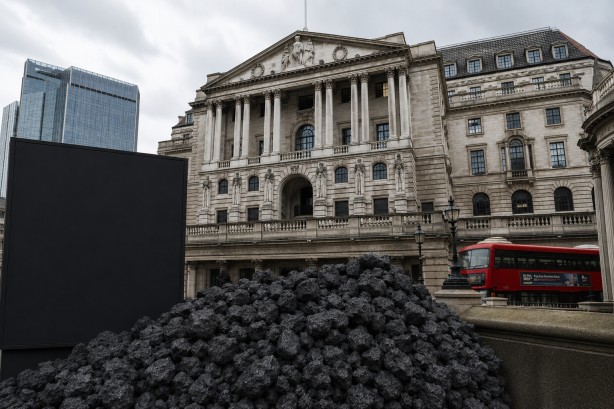
The Bank of England has taken a decisive step in combating climate-related financial risks by declaring that it will cease accepting bonds tied to thermal coal companies as collateral in its lending operations starting in October. This move underscores the central bank’s commitment to addressing environmental concerns within the financial sector.
In their routine operations, commercial banks, including prominent financial institutions, rely on bonds as collateral when they borrow funds from the central bank to facilitate daily functions and transaction settlements. However, under this new directive, bonds associated with thermal coal, which is predominantly used in power plants for electricity production, will no longer qualify as acceptable collateral.
The Bank of England highlighted the increasing financial risks faced by companies involved with thermal coal, especially as nations worldwide hasten their efforts to transition towards greener energy sources and aim for net-zero emissions. This shift implies that assets linked to coal could depreciate over time, posing a threat to financial stability.
Furthermore, the central bank’s policy includes provisions to impose discounts on bonds from other sectors that are similarly exposed to climate risks, in an effort to shield its balance sheet from potential devaluation. Environmental advocates have lauded this initiative, suggesting it sends a powerful message to financial markets and might prompt commercial banks to reconsider their involvement with industries that heavily pollute the environment. Over 150 major financial institutions globally have already implemented restrictions on transactions connected to the thermal coal industry.
Experts point out that the success of this policy will hinge on the methods used to evaluate climate risks and whether such regulatory measures will be extended to encompass other environmentally detrimental activities in the future. As the financial landscape evolves, the Bank of England’s decision could serve as a catalyst for broader changes across the sector.