
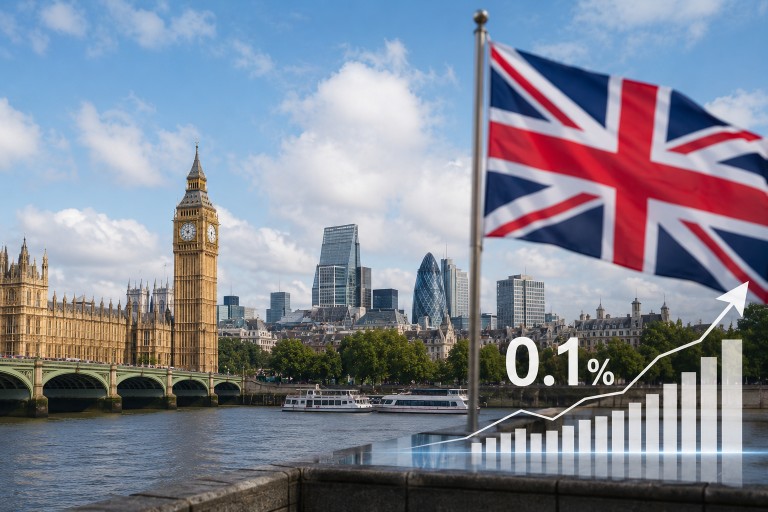
The United Kingdom’s economy saw a slight increase in May, growing by 0.1% after experiencing a contraction of the same percentage in April. This information reflects the country’s economic performance amidst various challenges. The services sector was the main driver behind this growth, showing a 0.3% rise. However, these gains were tempered by declines in other areas, with production falling by 0.5% and construction activity by 0.8%. Notably, scientific research and development emerged as the standout performer, achieving a substantial 5.1% increase for the month.
Over the span of three months leading up to May, the UK economy recorded a growth rate of 0.7%. This was a slight deceleration compared to the previous three-month period, which saw an 0.8% increase. Despite these figures, economists highlight the resilience of the economy in the face of challenging conditions such as elevated energy prices and the uncertainty stemming from ongoing conflicts in the Middle East.
Economists express concerns over the persistent risks to economic growth posed by rising energy costs and continued supply chain disruptions. These elements remain significant hurdles that could potentially affect future economic performance.
In light of these developments, the International Monetary Fund has adjusted its forecast for the UK’s economic growth, now predicting a 1% increase for the year. While this adjustment may offer some optimism, analysts continue to emphasize the uncertainty that looms over economic projections, primarily due to the ongoing geopolitical tensions affecting the global landscape.